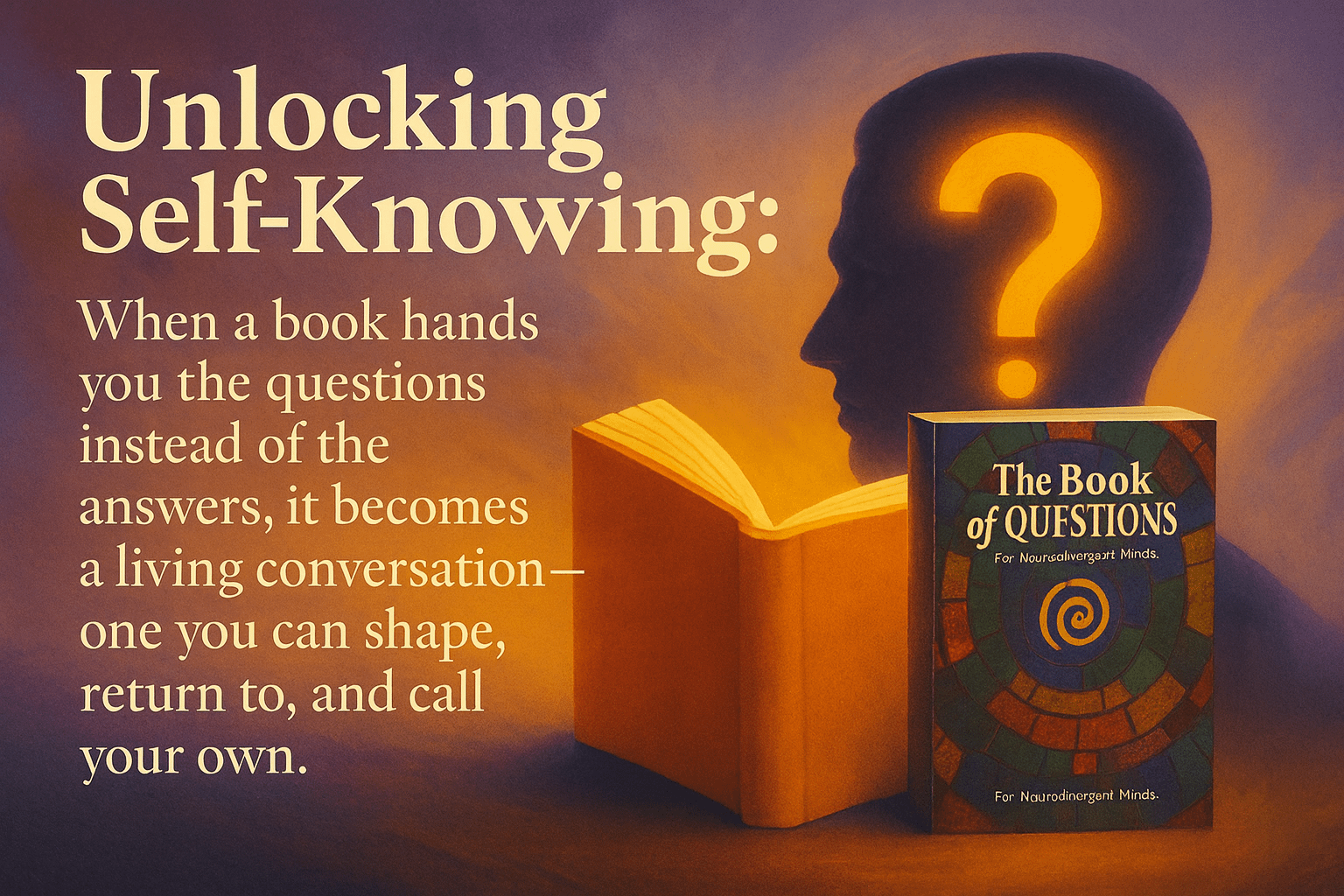

Scaffolding as an Open Invitation
At the heart of The Book of Questions – For Neurodivergent Minds lies its scaffolding: the invisible architecture that holds each prompt in place, offers context, and then gently steps back.
Unlike workbooks that demand you follow a rigid sequence, here you receive:
Orientation Gateways
Clear primers and “how to use” notes that calm performance anxiety and honor your pace.Behind-the-Question Guides
Metacognitive sidebars that unpack intent, model reflection, and grant permission to answer—or pass.Resonance Narratives
Short, vivid stories that mirror possible responses and remind you: you are not alone in your thoughts.
This layered support isn’t just decoration—it’s a perpetual welcome mat. Every page says: “You have the space, the time, and the right to make this question yours.”
Fluid Frameworks for Ever-Evolving Needs
Because neurodivergent minds don’t always move in straight lines, the book’s modular design meets you wherever you are:
Skip ahead when curiosity strikes.
Circle back to questions that linger.
Reorder sections to fit therapeutic goals, classroom lessons, or family rituals.
The questions become your raw material; the scaffolding remains your constant guide. Whether you’re working through sensory overwhelm, testing new boundaries, or building a legacy of self-authorship, the structure flexes—never fractures—around your needs.
Agency Through Intentional Design
What makes this more than just a workbook is its radical shift of power. Many neurodiversity-affirming resources still position the author as the authority.
Here, the reader is the expert:
You define success—there are no “right” answers, only honest ones.
You choose your medium—write, sketch, speak, record.
You own the pacing—linger, sprint, pause, repeat.
By aligning every typographic choice, color contrast, and narrative beat around autonomy, the book becomes a co-created space rather than a top-down lesson.
Why This Matters Right Now
In a world that demands constant performance, The Book of Questions offers a radical alternative: presence.
It transforms introspection from a checklist into a practice of belonging—first to yourself, then to your community.
For neurodivergent readers, it’s a mirror that reflects both your challenges and your strengths, without judgment.
For therapists and teachers, it’s a versatile tool that adapts to any session, no matter the client or classroom.
For parents and caregivers, it’s a shared ritual—a prompt for morning coffee or bedtime conversation that builds trust over time.
This genre-defining innovation doesn’t just fill a gap in neurodiversity literature—it rewrites the rules of engagement.
It proves that support can be both structural and invisible, that guidance can empower rather than direct, and that every question holds the seed of transformation.
Your Invitation to Begin
Pick it up.
Skip to ANY page.
Answer one question and then close the cover.
Notice how it feels.
Whether you’re stepping into this book as a reader, the guide, or a loved one seeking connection—you’ll find that the true innovation isn’t in the prompts themselves—it’s in the scaffolding that grants you permission to make the journey your own.
Open your book. Find your question. Start wherever you are.
Order Here


Related
Discover more from bookofquestions.org
Subscribe to get the latest posts sent to your email.
0 Comments